 Digital Egiz is developing professional development courses on digital twins and corporate AI agents
The Digital Egiz team is shaping the concepts of two hands-on professional development courses for the heads of organisations and companies. Both are built around AI agents and data held on local computing infrastructure: in the first course these tools help to analyse production, in the second one — to work with an organisation’s internal documents.
As project lead Gulshat Amirkhanova explains, the idea of turning the experience gathered during the project into a practical training format grew out of developing and demonstrating digital twin components at a real production site. The team’s aim is to teach company managers to see the complete picture of how the tools that have been built are applied.
🏭 The “Digital Twin of Production” course
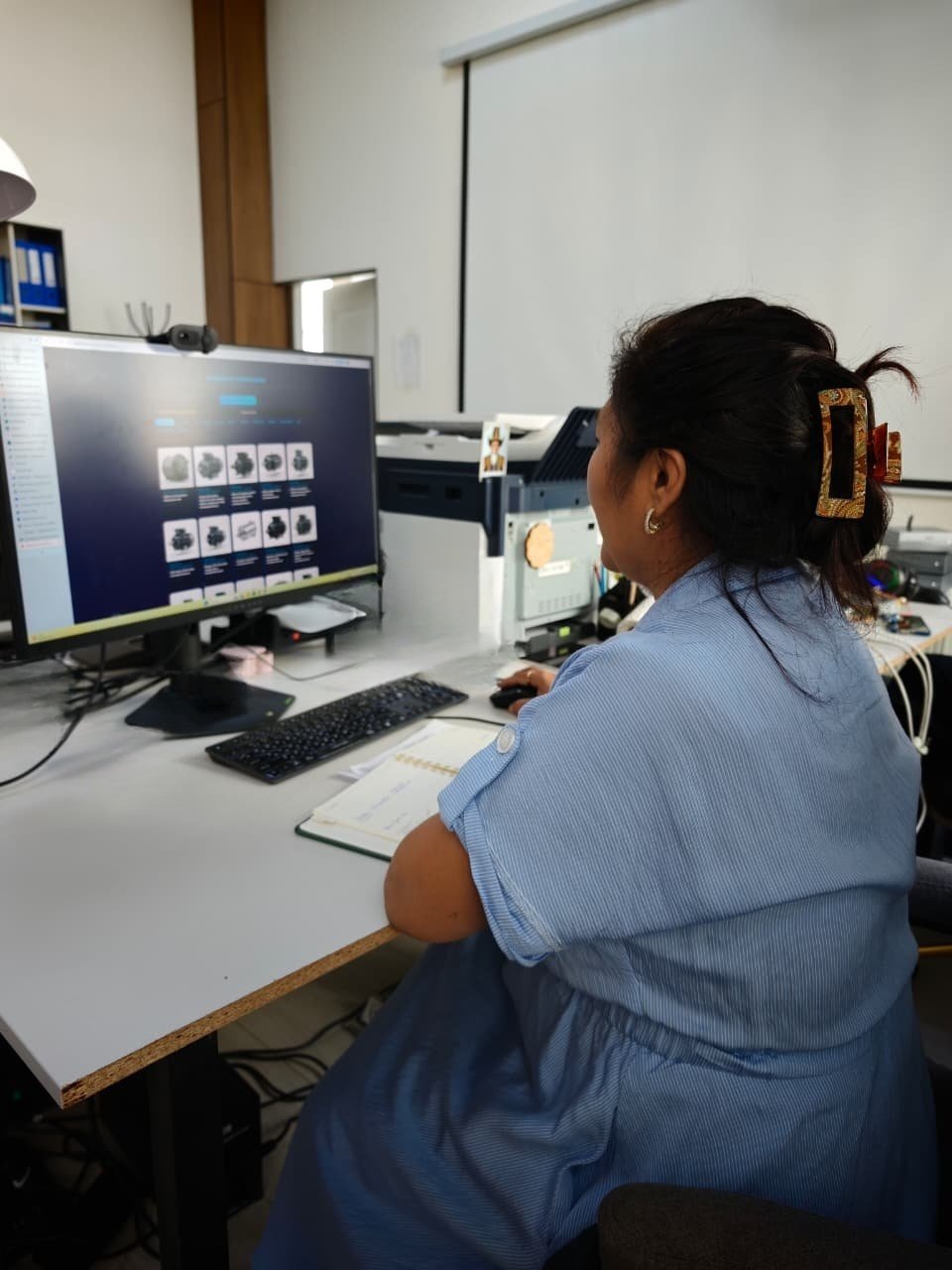
The first course deals with using a digital twin to assess production decisions. The training is expected to be built around the case of the bakery that the Digital Egiz team works with as part of the project, but the course is intended for managers of companies in any industry.
According to Gulshat Amirkhanova, the course should help a manager understand which data a digital twin needs and how a digital model can be used when deciding whether to change a piece of equipment or a production process.
The structure of the learning scenario and the technical components of the course are being developed by research intern Alikhan Amirkhanov. He links a digital event log, process analysis, a simulation model and the interpretation of the results by an AI agent into a single sequence.
The project has already demonstrated voice registration of production events, the display of batch movements and the launch of a pre-built simulation model. Process analysis and the calculation of possible changes, however, have so far been shown on simulated rather than real production data.
Alikhan explains that process mining reconstructs the course of a process from a log of digital events. With real data the technology makes it possible to see the actual routes of batches, delays and deviations. A simulation model solves a different task: it helps to check what may change under different parameters, for example after adding equipment or changing the duration of an operation.
In one of the demonstration scenarios the AI agent Hermes launched a pre-configured model of a bakery line and presented the results of the calculation in response to a natural-language request. These figures relate to a training simulation and do not reflect a measured effect at an operating plant.
For the practical part of the course the authors are building an open library of ready 3D models of production objects. The idea is that course participants will assemble virtual shops and plants from them as part of their assignments. The team is now deciding which elements of the course participants will master on their own and which will be presented as demonstrations.
📄 The “Corporate AI Agents” course
The second course, Gulshat Amirkhanova says, builds on the team’s experience in creating AI agents and making them work with local data. The same principles are considered for corporate tasks that are not directly related to production: searching through orders, regulations, instructions and other internal documents.
The technical scenario of the course is being developed by Alikhan. He starts from the fact that corporate documents may be held in different sources and cannot always be passed to external cloud services. In such cases the model and the documents are to be placed on the organisation’s own hardware.
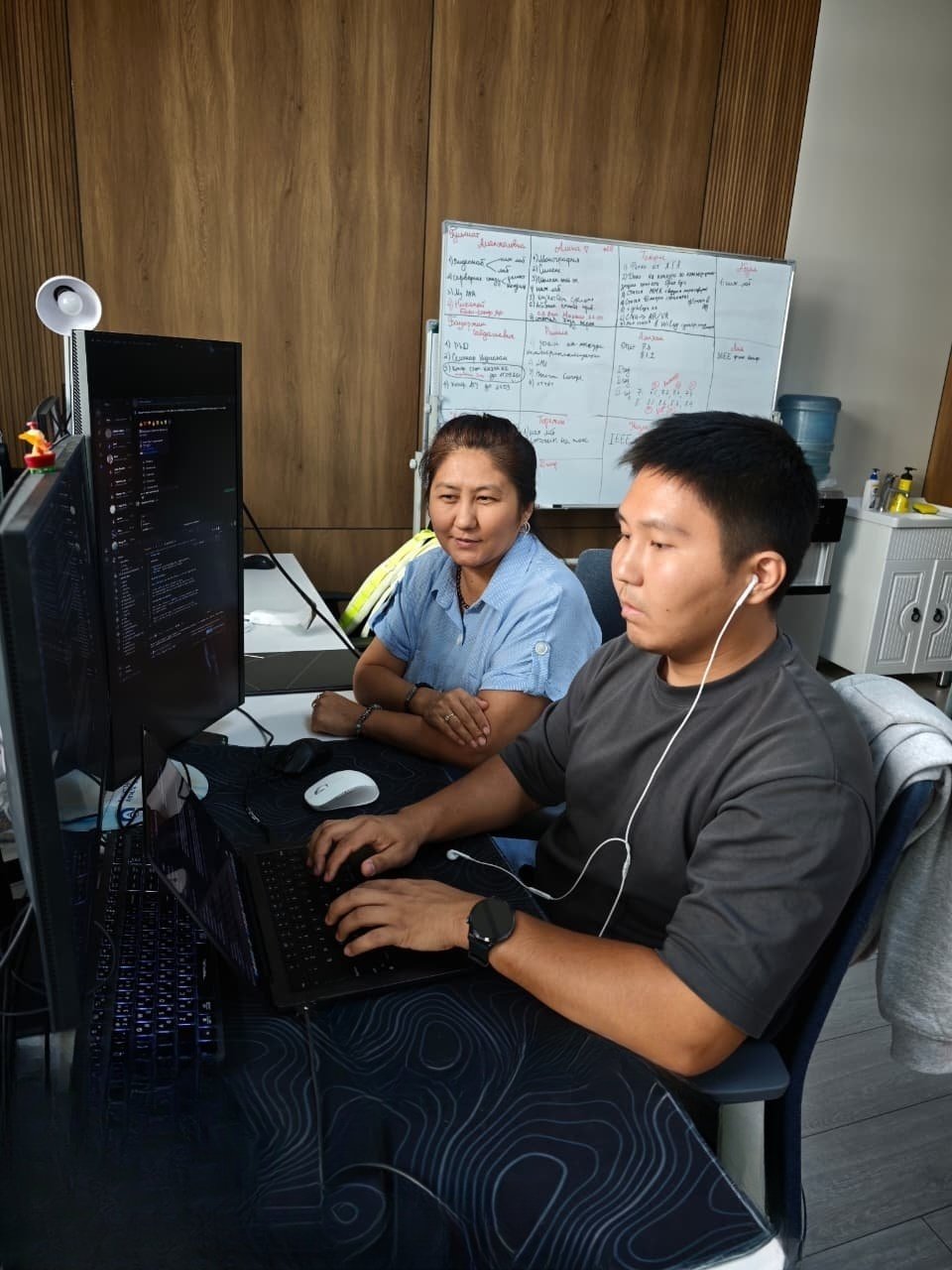
For the demonstration prototype Alikhan prepared more than a hundred synthetic documents of a fictitious insurance company, about a quarter of them in Kazakh. The synthetic documents imitate real materials but contain no information from an existing organisation. In the prepared scenario the agent has to find the order that is currently in force, take the history of amendments into account and support the answer with a reference to the source. If the required information is missing, the system reports that no answer was found.
Future participants will also be shown the difference between a chatbot and an AI agent. As Alikhan explains, a chatbot mostly produces a text answer, whereas an agent can choose among the tools it has been given and carry out a sequence of permitted actions — for example, open a folder, find documents and compile an inventory of them.
🧭 What comes next
Both courses are provisionally planned as in-person practical training for small groups. At the next stage the team led by Gulshat Amirkhanova will formulate the learning outcomes, define the overall structure of the courses and continue developing the technical demonstrations and practical assignments. The duration, format and terms of participation will be settled after that.