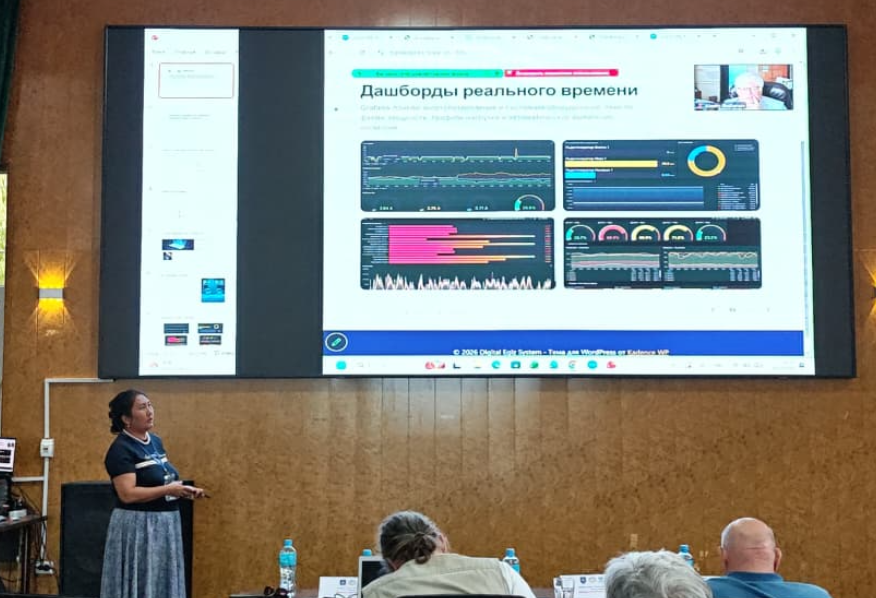


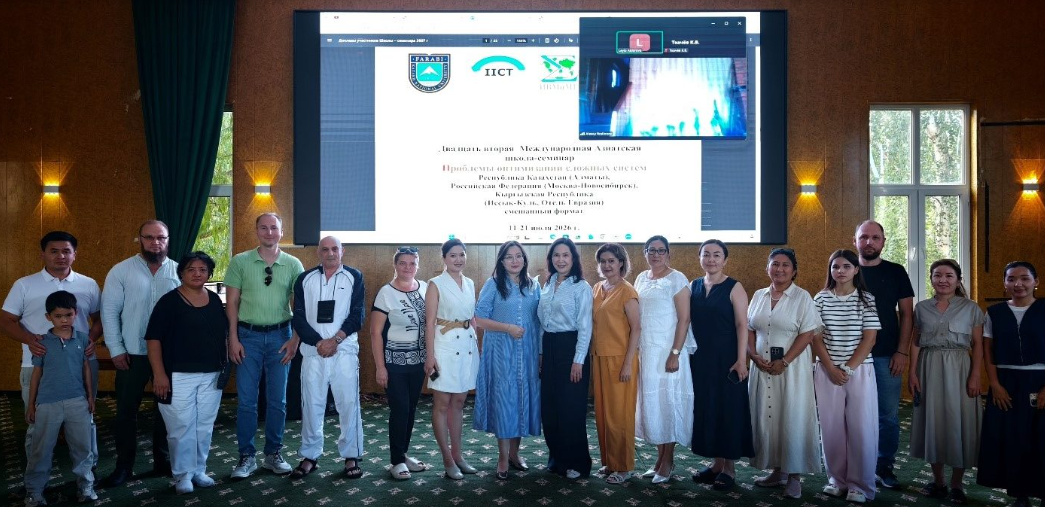
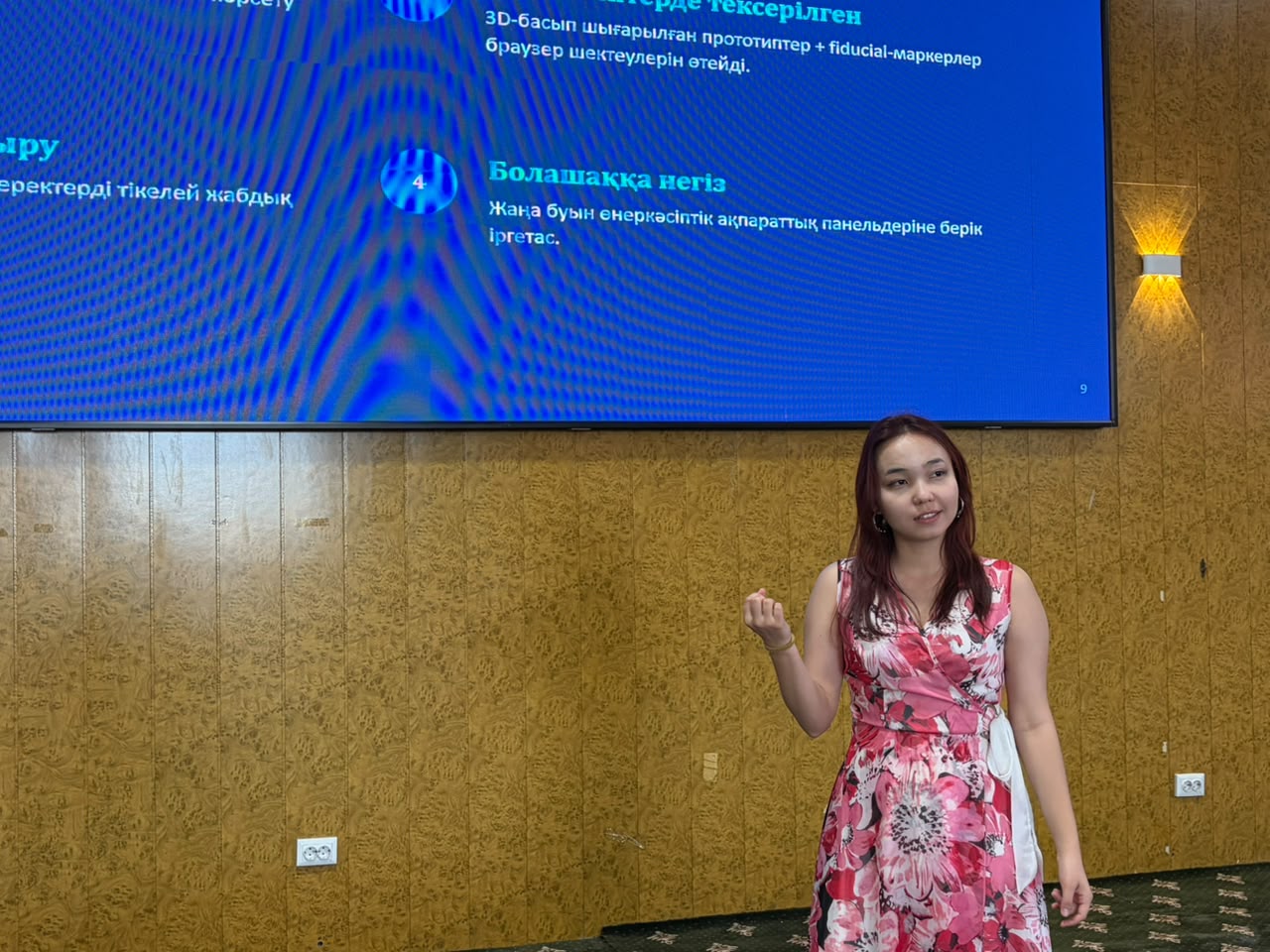
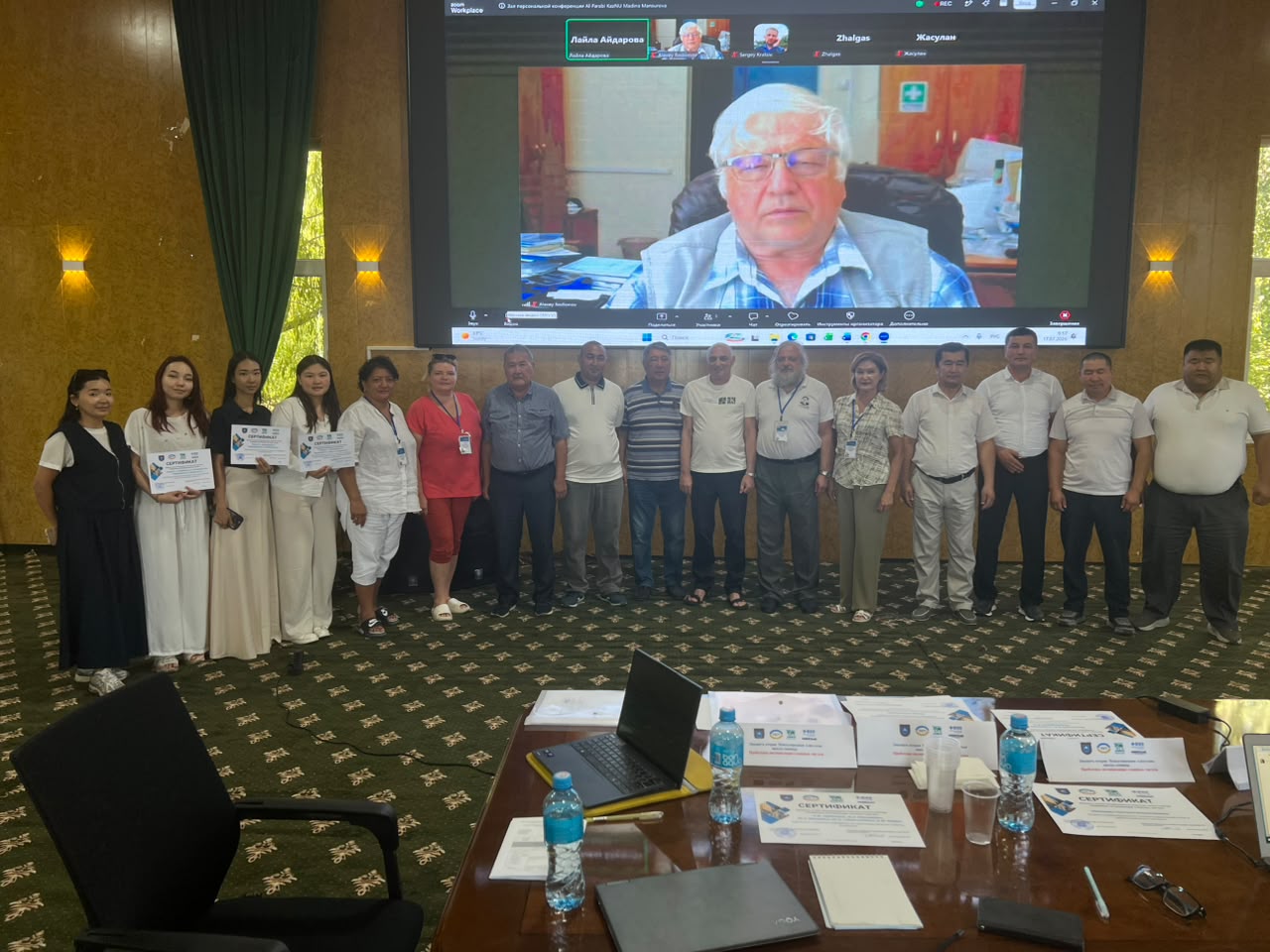

The 22nd International Asian School-Seminar organized by Al-Farabi Kazakh National University together with the Institute of Information and Computational Technologies of the Science Committee, Ministry of Science and Higher Education of the Republic of Kazakhstan. Our team presented seven papers on digital twins, industrial IoT and the application of AI in optimization — mainly in Section 08 “Digital Twins” and Track 07 “Artificial Intelligence in Optimization”.
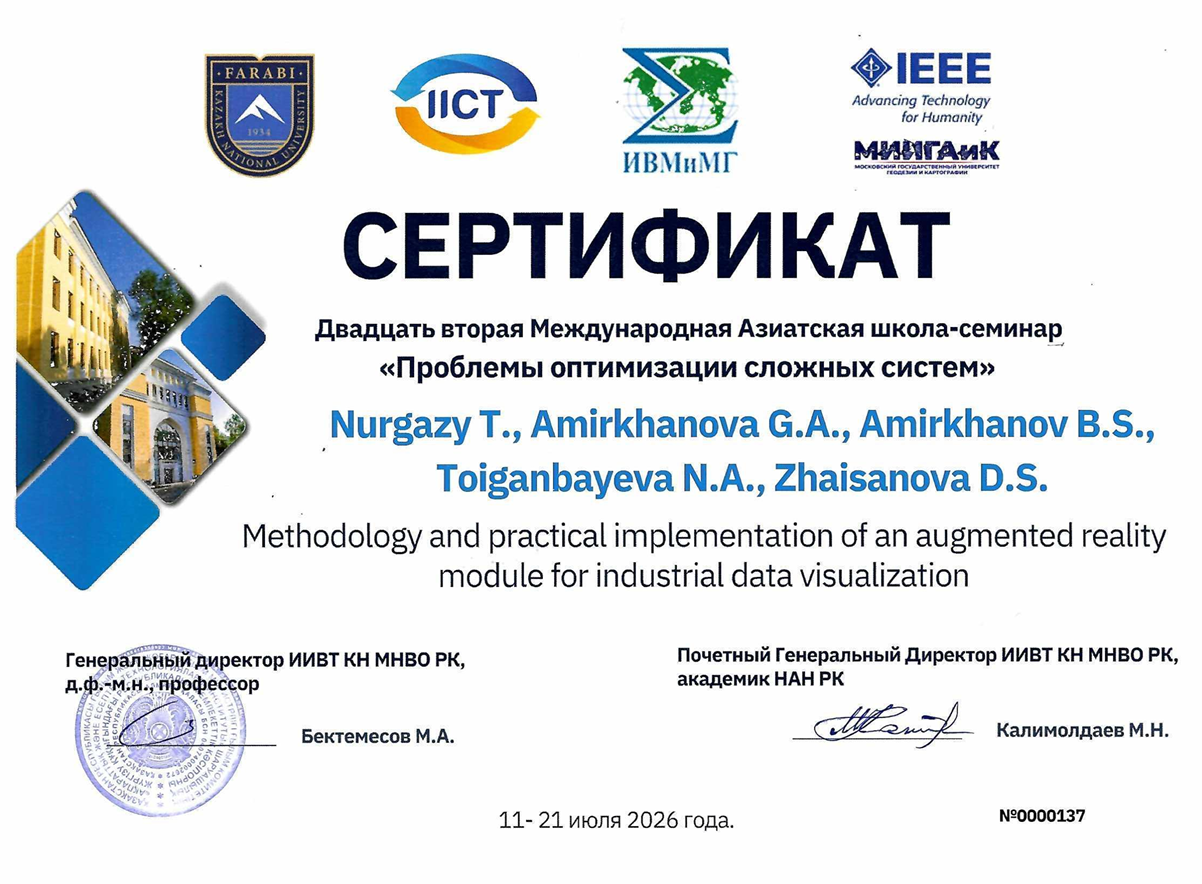
Paper 1. “Methodology and Practical Implementation of an Augmented Reality Module for Industrial Data Visualization”
Authors: T. N. Nurgazy, G. A. Amirkhanova, B. S. Amirkhanov, N. A. Toiganbayeva, D. S. Zhaisanova
Summary: methodology and practical implementation of an augmented reality module for industrial data visualization. (Section 08)
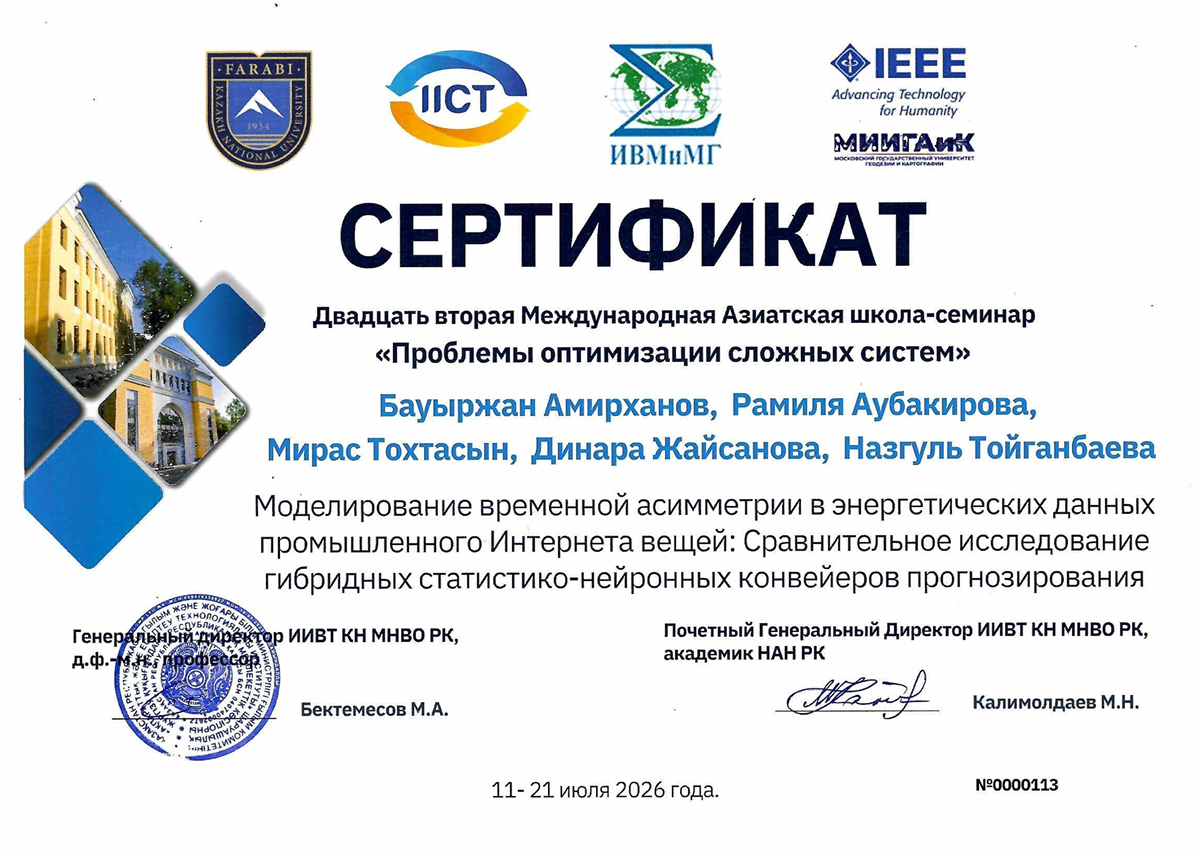
Paper 2. “Modelling Temporal Asymmetry in Industrial Internet of Things Energy Data: A Comparative Study of Hybrid Statistical–Neural Forecasting Pipelines”
Authors: B. Amirkhanov, R. Aubakirova, M. Tokhtassyn, D. Zhaisanova, N. Toiganbayeva
Summary: a comparison of the hybrid forecasting architectures Prophet+LSTM and SARIMA+LSTM for day-ahead energy consumption forecasting at the GoldSapa bakery plant (15 IoT meters). The Prophet+LSTM model achieved an MAE of 3.39 kWh, outperforming the seasonal naive baseline by 12.3% and reducing Prophet’s systematic bias by 69%.
Paper 3. “Hardware and Algorithmic Optimization of Edge Computing in Self-Mixing Laser Interferometry for Digital Twins”
Authors: B. Amirkhanov, A. Nazargozha, G. A. Tyulepberdinova, S. Adilzhanova, N. Yussubova
Summary: a self-mixing interferometry (SMI) sensor based on the ADL-65075TL laser for contactless vibrometry. Offloading the FFT to an ESP32 microcontroller (latency under 18 ms) minimizes network traffic — only spectral telemetry is transmitted to the digital twin.
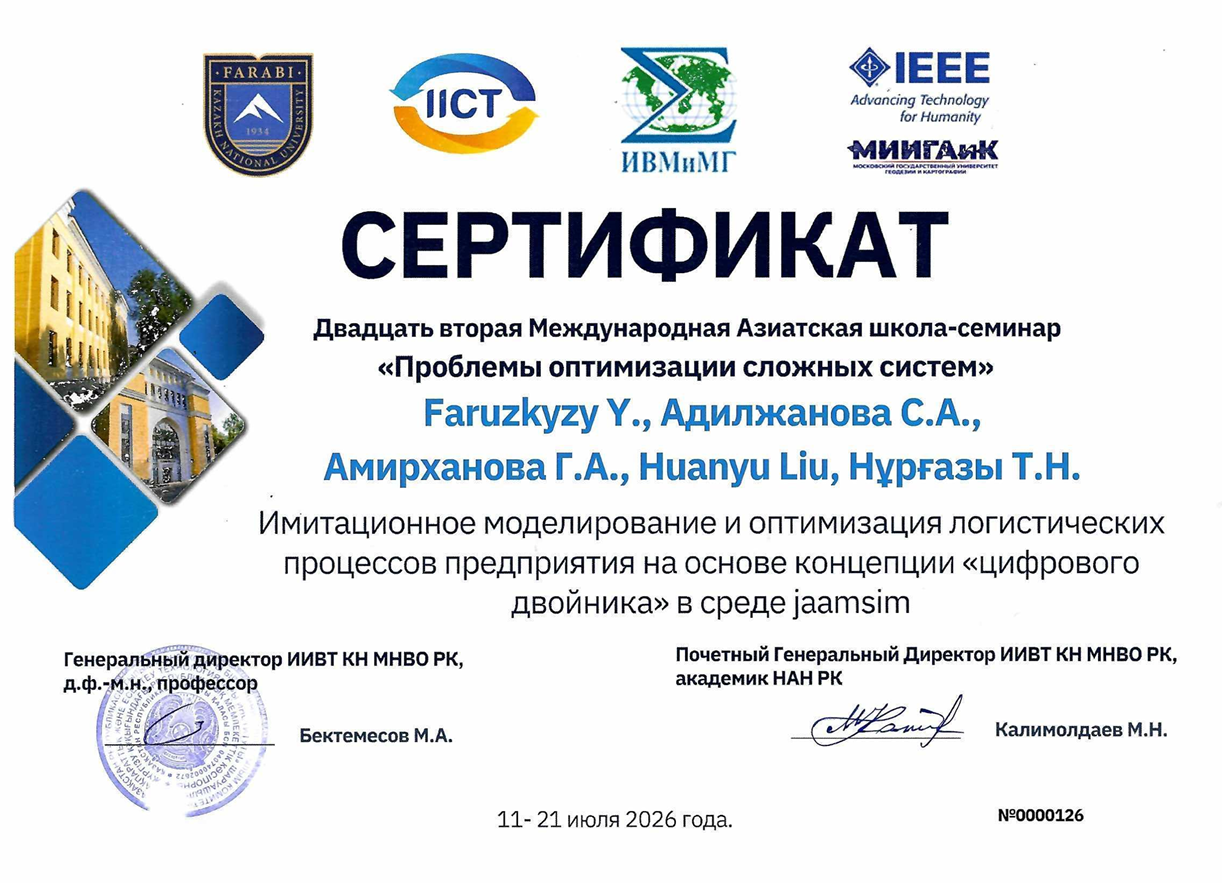
Paper 4. “Simulation Modelling and Optimization of Enterprise Logistics Processes Based on the Digital Twin Concept in the JaamSim Environment”
Summary: zero-risk virtual testing of logistics hypotheses in the discrete-event simulation environment JaamSim. A comparison of decentralized (5 small plants) and centralized (1 mega-plant) strategies showed a 31.5% cost reduction in favour of intra-city decentralized logistics.
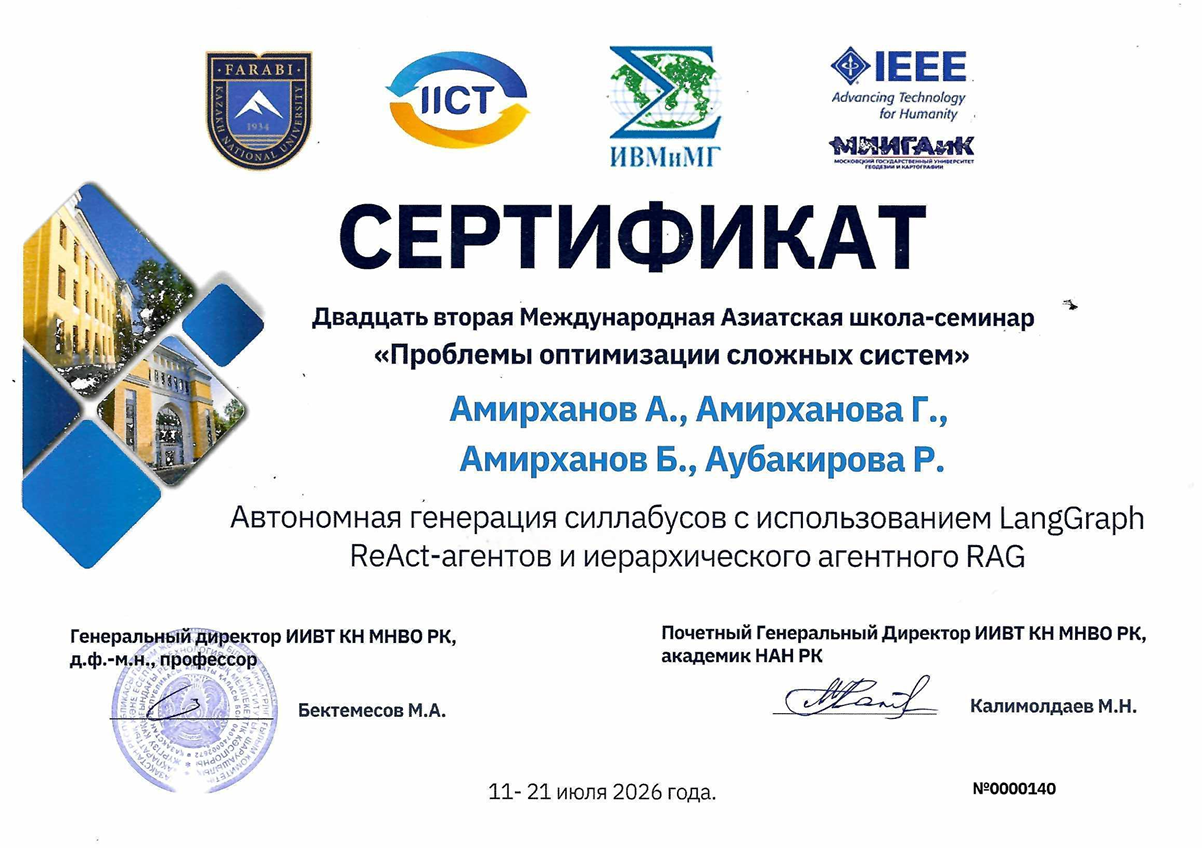
Paper 5. “Autonomous Syllabus Generation Using LangGraph ReAct Agents and Hierarchical Agentic RAG”
Authors: A. B. Amirkhanov, B. S. Amirkhanov, G. G. Gaziz, A. A. Mussinova, L. Bektemir
Summary: the autonomous Course Architect agent built on LangGraph ReAct with an agentic RAG pipeline for synthesizing curricula from unstructured corporate documents without user-defined pedagogical objectives.
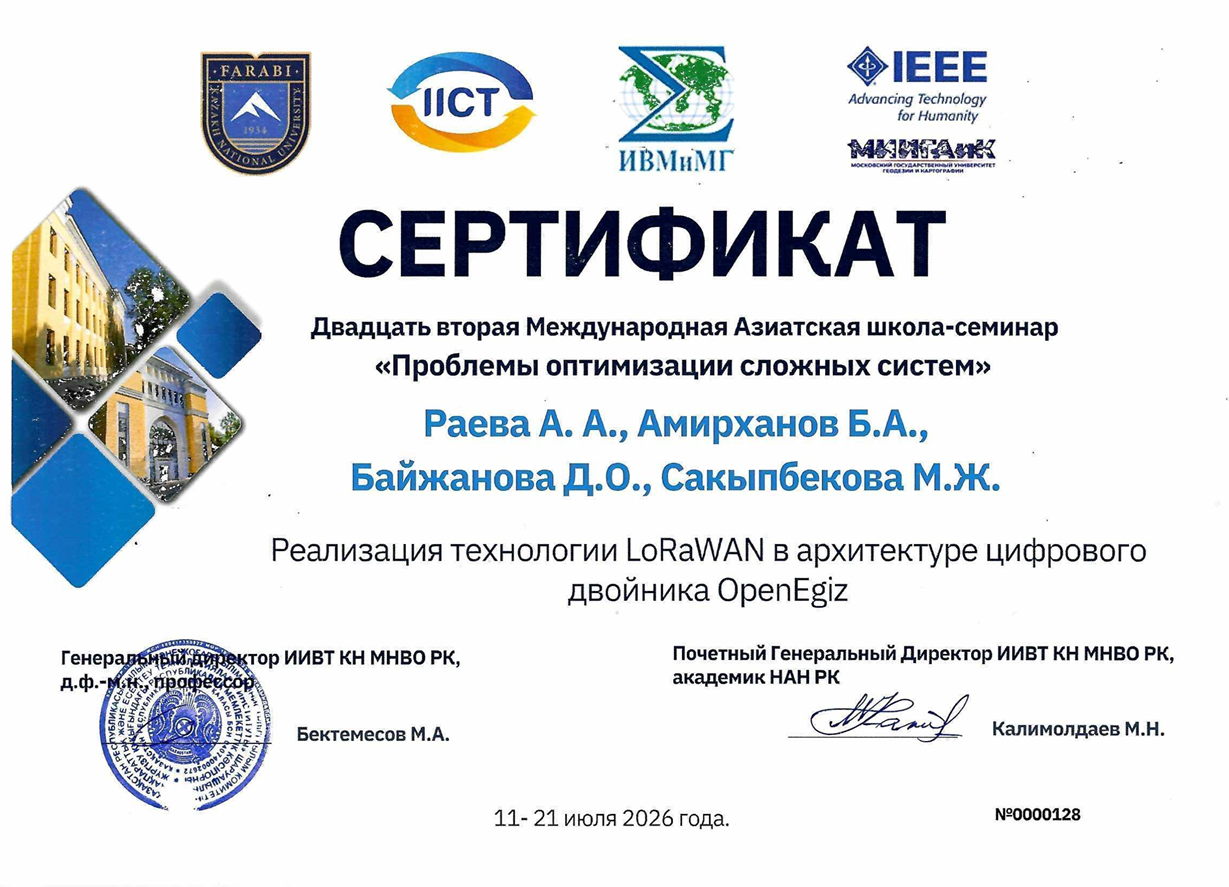
Paper 6. “Implementation of LoRaWAN Technology in the OpenEgiz Digital Twin Architecture”
Authors: A. A. Raeva, B. A. Amirkhanov, D. O. Baizhanova, M. Zh. Sakypbekova
Summary: the design and practical implementation of IIoT systems based on LoRaWAN and the open digital twin platform OpenEgiz: data integration layers, energy consumption optimization, mathematical models of link quality, and the end-to-end process from sensor network deployment to 3D visualization.
Paper 7. “Adaptive Prompting: Optimizing Language Model Behaviour through Cognitive Diagnostics for Pedagogical Support in STEM Education”
Authors: A. Aidynuly, Sh. Adilkyzy, N. Toiganbayeva, G. Amirkhanova, D. Zhaisanova
Summary: a Bayesian network tracks the student’s cognitive state and dynamically shapes constraints for the LLM, steering it towards the role of a mentor — a source of hints and clarifying questions rather than ready-made answers. (Track 07)
The proceedings of Asia EISC 2026 are published by SPIE and indexed in EI-Compendex and Scopus.